Lantana Place Retail Sells for $57.5M — What It Means for Southwest Austin
By Bryce Low
February 23, 2026 at 1:33 PM CST
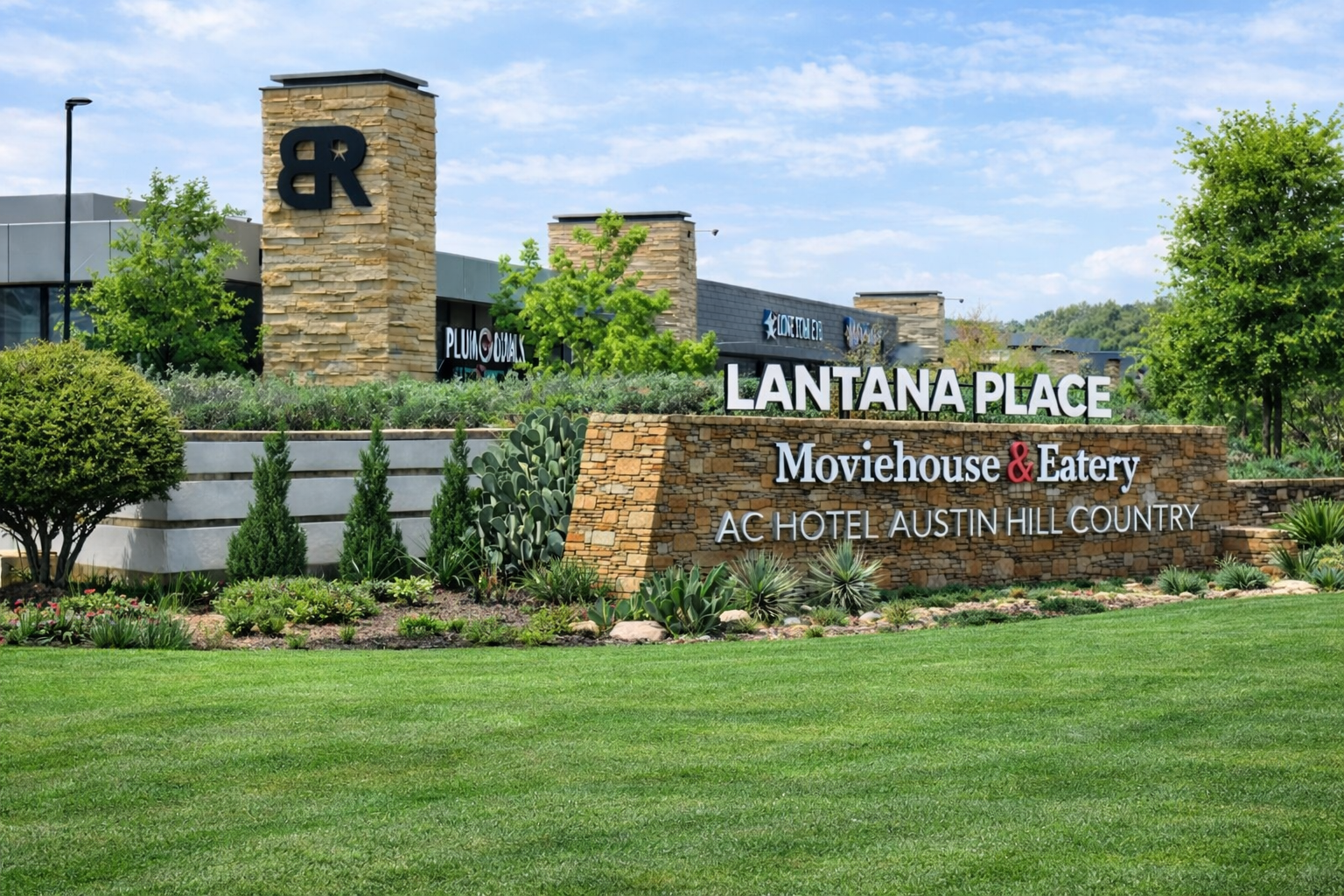
In November 2025, Stratus Properties Inc. completed the $57.5 million sale of the stabilized retail portion of Lantana Place.
Lantana Place Retail Sells for $57.5M — What It Means for Southwest Austin
In November 2025, Stratus Properties Inc. completed the $57.5 million sale of the stabilized retail portion of Lantana Place. While it may read like just another commercial real estate headline, transactions of this size often tell a deeper story about how institutional investors view a submarket. Living and working in the Southwest Austin corridor—and spending time at Lantana Place regularly—I tend to watch these moves closely because they offer insight into where capital sees long-term stability.
Earlier in 2025, Stratus Properties refinanced the retail component, improving the property’s capital structure and extending its loan maturity. By the time the center was fully stabilized and income-producing, it was well positioned for a sale. Once a retail asset reaches that stage—leased, performing, and predictable—it becomes particularly attractive to long-term income-focused buyers. The November transaction at a $57.5 million valuation reflects that shift from development asset to stabilized investment.
According to Travis County property records, the retail parcel transferred to Scripps CMH LLC (70.538% ownership interest) and Lantana SRB LLC (29.462% ownership interest), structured as a tenants-in-common acquisition. This structure is common in larger commercial transactions and often associated with institutional or high-net-worth capital. Both entities list California mailing addresses, suggesting that out-of-state investors view this corridor as a durable, income-producing location worth holding.
Lantana Place functions as more than a retail strip; it serves as a daily convenience hub for a broad Southwest Austin trade area that includes Oak Hill, Lantana Hills, Mirador, Escondera, Amarra, and nearby multifamily communities. When a stabilized retail center in this location trades at this level, it signals confidence in local population growth, traffic patterns, and consumer spending. Retail strength tends to reinforce residential desirability, and long-term ownership typically means operational consistency rather than short-term repositioning.
Stratus Properties did not exit Southwest Austin entirely; rather, the company monetized a stabilized asset while retaining other interests within the broader development footprint. That approach aligns with how experienced developers recycle capital and manage risk over time. For the surrounding neighborhoods, the more meaningful takeaway is that national capital continues to allocate into this part of Austin. Ongoing investment at this scale suggests the corridor is being underwritten not as speculative growth, but as established, institutional-grade real estate.
Stratus Properties has also referenced additional projects within its broader development pipeline tied to the Lantana master plan and surrounding area. I’ll be taking a closer look at those plans in a separate market update, as future multifamily phases and remaining entitlements could further shape the trajectory of Southwest Austin in the coming years.

Bryce Low
Southwest Austin Market Insight
REALTOR®
Realty Texas
Comment